
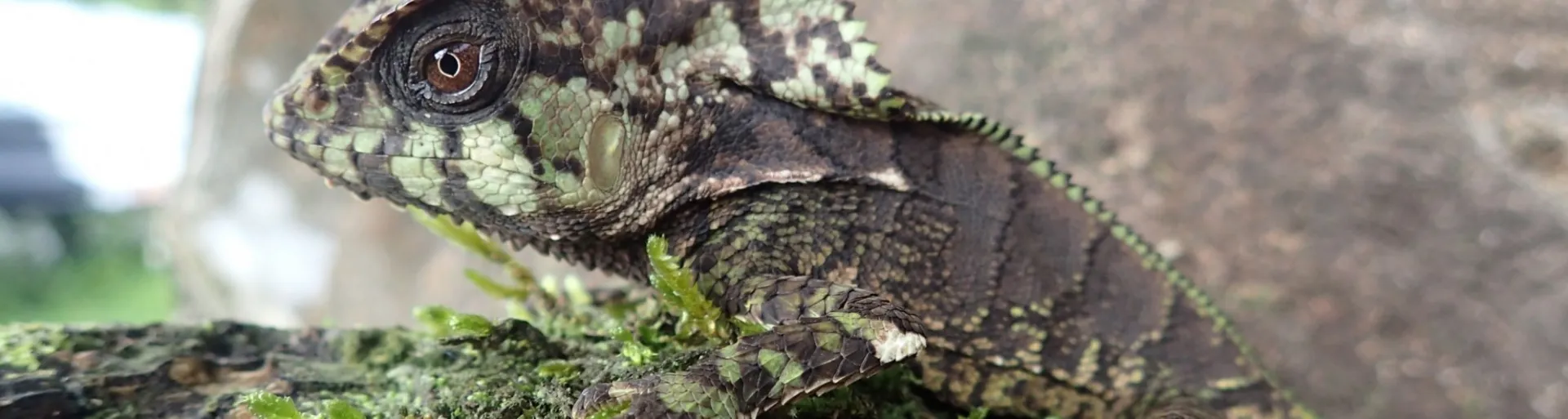
Starting in Fall 2024, E3B introduced a new minor in Ecology, Evolution, and Environmental Biology. This minor provides grounding in the intellectual pillars of the department while affording students the option to explore the broad scope of biodiversity, ecosystems, and environmental biology. Students may also delve into specific subfields such as conservation biology, botany, behavioral biology and ecology, ecosystem ecology, primatology, or human evolution.
No previous biology background is required. Ideally, students will take one course by the end of their second year to see if the program is of interest, but juniors and even seniors who develop a curiosity in the subject may complete the minor without difficulty. The two undergraduate advisors provide guidance as to offerings.
The four introductory offerings are “gateway” classes. We recommend that students interested broadly in organismal biology/environmental biology take either Environmental Biology 1 or 2, or both. Those with a focus on human and non-human primate evolutionary biology and behavior should take either Human Origins and Evolution or Behavioral Biology of Living Primates. We make this recommendation as it maximizes the number of upper-level courses that would be open to them but there is still considerable flexibility. For example, there are a small number of classes without any prerequisites and students with foundational biology courses from either Columbia or Barnard Biology may fulfill some class prerequisites*. Advisors will provide guidance as to offerings and a complete list of courses including prerequisites is available on the E3B website. (You should always feel free to contact the Director of Undergraduate Studies, but you may find some answers to your questions through links to the Bulletin, FAQs, Research Opportunities, and Careers.)
*Students who take BIOL2005/2006 or Barnard BIO1501 do not have to take Environmental Biology 1 and may substitute this for courses requiring the latter as a prerequisite, but must take five other courses in E3B. Since the BIOL sequence does not include evolution (in contrast to EB1) we highly recommend that they take Environmental Biology 2 or one of the other foundation courses. Students who take Barnard BIO1500 do not have to take Environmental Biology 2 as it is a similar course, but must take five other courses in E3B.
With advisor approval, students may take a maximum of two courses from a limited set taught by affiliates in other departments. For example: DEES GU4560 The Ecology of Tree line in a Changing Climate; BIOL-BC2240 Plant Evolution and Diversity; BIOL/ANAT BC2574-Laboratory in Human Anatomy; BIOL-BC2272 Ecology; and BIOL BC-3380-Applied Ecology and Evolution.
Minors must take one of the following four introductory courses and any other four 3-4 points E3B courses (this includes the other introductory classes).
- EEEB UN2001 Environmental Biology 1 (offered every fall)
- EEEB UN2002 Environmental Biology 2 (offered every spring)
- EEEB UN1010 Human Origins and Evolution (offered every fall)
- EEEB UN1011 Behavioral Biology of Living Primates (offered every spring)
Remaining courses may be selected from this list.
Students can explore their interests broadly or focus on specific topics listed below. To clarify, each set has a list of recommended options but the requirement is one introductory course and four additional classes.
- UN2002 Environmental Biology II
- UN3001 Saga of Life
- UN3087 Conservation Biology
- GU4086 Ethnobotany
- GU4112 Ichthyology
- GU4126 Conservation Genetics
- GU4140 Ornithology
- GU4200 Introduction to Mammalogy
- GU4201 Ecology, Behavior and Conservation of Mammals
- GU4210 Herpetology
- GU4650 Biodiversity and Ecosystem Processes
- GU4666 Insect Diversity
- GU4910 Field Botany and Plant Systematics
- UN2002 Environmental Biology II
- GU4086 Ethnobotany
- GU4100 Forest Ecology
- GU4550 Plant Ecophysiology
- GU4910 Field Botany and Plant Systematics
- DEES GU4560 The Ecology of Tree line in a Changing Climate
- BIOL-BC2240 Plant Evolution and Diversity
- Any of the four introductory courses: UN2001/UN2002/UN1010/UN1011
- UN3240 Challenges and Strategies in Primate Conservation
- UN3087 Conservation Biology
- UN3919 Trading Nature
- GU4126 Conservation Genetics (*additional prereq: basic knowledge of genetics & math)
- GU4129 Zoo Conservation
- GU4201 Ecology, Behavior and Conservation of Mammals
- GU4605 Human-Wildlife Conflict
- UN2002 Environmental Biology II
- UN3001 Saga of Life
- UN3005 Intro Statistics Ecology and Evolutionary Biology
- GU4015 Animal Communication: A Primate Perspective
- GU4065 Tropical Biology (Winter Break Course in Kenya)
- GU4100 Forest Ecology
- GU4111 Ecosystem Ecology and Global Change
- GU4127 Disease Ecology
- GU4134 Behavioral Ecology
- GU4135 Urban Ecology and Design
- GU4150 Theoretical Ecology
- GU4160 Landscape Ecology
- GU4192 Introduction to Landscape Analysis
- GU4650 Biodiversity and Ecosystem Processes
- GU4670 Introduction to GIS
- UN2001 Environmental Biology I
- UN3001 Saga of Life
- UN3005 Intro Statistics Ecology and Evolutionary Biology
- UN3204 Dynamics of Human Evolution
- UN3220 Evolution of Human Growth and Evolution
- GU4050 Programming and Data Science Skills GU4055 Principles and Applications in Modern DNA Sequencing
- GU4126 Conservation Genetics
- UN1010 Human Origins and Evolution
- UN3204 Dynamics of Human Evolution
- UN3208 Explorations in Primate Anatomy
- UN3215 Forensic Osteology
- UN3220 Evolution of Human Growth and Development
- UN3910 The Neandertals
- UN3998.002 Group Independent Study in Postcranial Osteology
- UN1011 Behavioral Biology of Living Primates
- UN3240 Challenges and Strategies in Primate Conservation
- UN3208 Explorations in Primate Anatomy
- UN3940 Current Controversies in Primate Behavior & Ecology
- GU4015 Animal Communication: A Primate Lens
- GU4350 Primate Sexuality
- Students may also broaden their base of knowledge with the following:
- GU4134 Behavioral Ecology
- GU4201 Ecology, Behavior and Conservation of Mammals
- UN1011 Behavioral Biology of Living Primates or UN2002 Environmental Biology II
- UN3208 Explorations Primate Anatomy
- UN3240 Primate Conservation
- GU4015 Animal Communication: A Primate Perspective
- GU4112 Ichthyology
- GU4134 Behavioral Ecology
- GU4140 Ornithology
- GU4200 Introduction to Mammalogy
- GU4201 Ecology, Behavior and Conservation of Mammals
- GU4210 Herpetology
- GU4605 Human-Wildlife Conflict
- GU4666 Insect Diversity